What Do Chinese People Actually Eat for Breakfast?
If you ask a Westerner what they ate for breakfast this morning, you’ll probably hear about cereal, toast, eggs, or a bowl of oatmeal. But in China, the morning meal is a completely different experience.
Chinese breakfast (Zǎo Cān – 早餐) is incredibly diverse, deeply regional, and honestly, a food lover’s paradise. Unlike the quick, cold breakfasts often eaten in the West, a traditional Chinese breakfast is usually hot, savory, and designed to be eaten on the go.
So, what do Chinese people actually eat in the morning? Let’s take a culinary tour through the most iconic traditional Chinese breakfast foods.
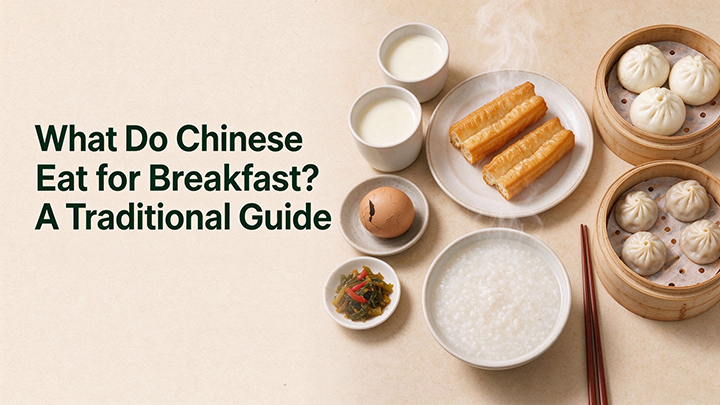
- The Holy Trinity: Soy Milk, Youtiao, and Baozi
In northern China, there is a classic breakfast combination that has stood the test of time.
- Soy Milk (Dòu Jiāng – 豆浆): Freshly made, warm soy milk is the ultimate morning drink. It can be sweet or savory (in some regions, it’s served with vinegar, chili oil, and dried shrimp!).
- Fried Dough Sticks (Yóu Tiáo – 油条): These are long, golden, crispy strips of deep-fried dough. They are perfect for dipping into warm soy milk or wrapping inside a flatbread.
- Steamed Buns (Bāo Zi – 包子): Fluffy, pillowy buns filled with meat, vegetables, or sweet bean paste. They are steamed to perfection and can be eaten with one hand while walking to work.
(💡 Love dim sum? Check out these traditional bamboo steamer baskets on Amazon to make your own baozi at home!)
- Congee: The Ultimate Comfort Food
If you travel further south, Congee (Zhōu – 粥) is the undisputed king of breakfast.
Congee is a thick, creamy rice porridge that is incredibly gentle on the stomach. By itself, it has a very mild flavor, so it’s almost always served with savory side dishes. Common accompaniments include pickled vegetables, salted duck eggs, fermented tofu, or small pieces of meat.
(💡 Making your own congee is easy. Shop high-quality rice cookers on Amazon here to get started.)
- Regional Favorites You Must Try
China is massive, so breakfast changes drastically depending on where you are. Here are a few regional stars:
- Jianbing (煎饼): Often called the “Chinese crepe,” this is a thin batter spread on a hot griddle, cracked with an egg, and brushed with spicy sauce. It’s wrapped around a crispy cracker and herbs. It is the ultimate street food breakfast.
- Dim Sum (Diǎn Xīn – 点心): In Guangdong and Hong Kong, breakfast means Dim Sum. Families gather in tea houses to enjoy small bamboo baskets filled with shrimp dumplings (Har Gow), pork dumplings (Siu Mai), and rice noodle rolls, all accompanied by endless cups of tea.
- Noodles (Miàn – 面): In cities like Wuhan (famous for Hot Dry Noodles) and Lanzhou, a steaming bowl of noodles is the only way to start the day.
(💡 Craving noodles for breakfast? Browse authentic Asian noodles and sauces on Amazon)
- How Do People Eat It? The “On the Go” Culture
One of the biggest differences between Western and Chinese breakfast culture is the pace.
In the West, breakfast is often a sit-down meal at home. In China, millions of people grab their breakfast from a street vendor on their way to work or school. You will often see people eating steaming hot buns or sipping soy milk from a cup while riding the subway or walking down the street.
Why You Should Try a Chinese Breakfast
Western breakfasts are often heavy on sugar and carbs. A traditional Chinese breakfast offers a much wider variety of flavors—from the spicy heat of Jianbing to the comforting warmth of a bowl of Congee.
Even if you don’t live in China, many of these ingredients are easily accessible. You can find frozen Baozi or dumplings in almost any Asian grocery store, and making a fresh pot of Congee at home is incredibly simple.
Ready to Start Cooking?
If you want to recreate the magic of a traditional Chinese breakfast at home, you only need a few basic tools. A good rice cooker is essential for congee, and a bamboo steamer is perfect for warming up buns and dumplings.
(As an Amazon Associate, we earn from qualifying purchases.)